

Alumna enhancing food security in India through a systems approach
Posted: 9 November 2026
This year marks the 75th anniversary of Australian Government scholarships for students from the Asia-Pacific region, with the first scholarship recipients travelling to Australia under the Colombo Plan in 1951. To commemorate this significant milestone, Australia Awards – South Asia & Mongolia launched the Alumni Impact Storytelling Competition to celebrate the outstanding contributions alumni have made to the development of their countries.
The competition invited alumni to showcase the impact they have created and reflect on how their Australia Awards experience has helped shape their personal and professional journeys.
Indian alumna Dr Kavitha Kasala placed in the ‘Commended’ category in both the written storytelling and image storytelling competitions. Dr Kasala completed an Australia Awards Short Course on Agriculture and Food Security delivered by the University of New England in 2025. Her story captured her shift from working within a single discipline to embracing a broader understanding of agrifood systems, highlighting how exposure to experts from fields as diverse as agriculture, trade, governance and policy reshaped her thinking. Judges commended the way the entry connected learning with action, demonstrating how insights gained through the Short Course were shared within her organisation and continue to influence her work in advancing nutrition-sensitive and inclusive agrifood systems in India.
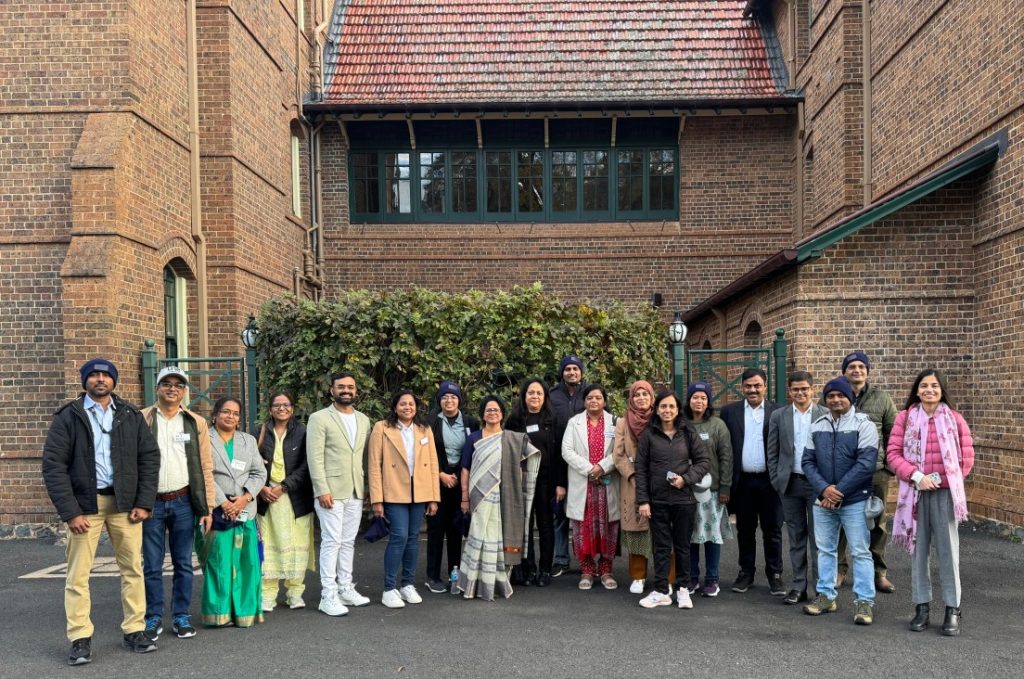
Kavitha (middle, in white saree) photographed with other Short Course participants at the University of New England in 2025.
Before joining the Australia Awards Short Course on Agriculture and Food Security, my work was primarily focused on research in agriculture, gender and nutrition. While I contributed to studies and projects, I often questioned how this research could better reach the communities who need it most. The Australia Awards experience became a turning point that helped me move from mainly doing research to applying my knowledge in practical ways to support the transformation of agrifood systems.
The course helped me understand that food security cannot be achieved by agriculture alone—it requires a systems approach. During the Short Course, I received training from experts across many fields, including livestock, agriculture, crop physiology, geospatial analysis and remote sensing, law, trade, governance, and policy. This multidisciplinary exposure helped me see how different sectors work together to influence food security and nutrition and contribute to sustainable agrifood systems.
Although all participants were from India, we came from very diverse professional backgrounds, from entomology to law. Learning together helped us understand how trade, governance and political systems shape food security outcomes. For many of us, this was the first time we had the opportunity to learn in such a strongly interdisciplinary environment. It helped us realise how working in silos limits progress and how collaboration across sectors can create stronger and more resilient agrifood systems.
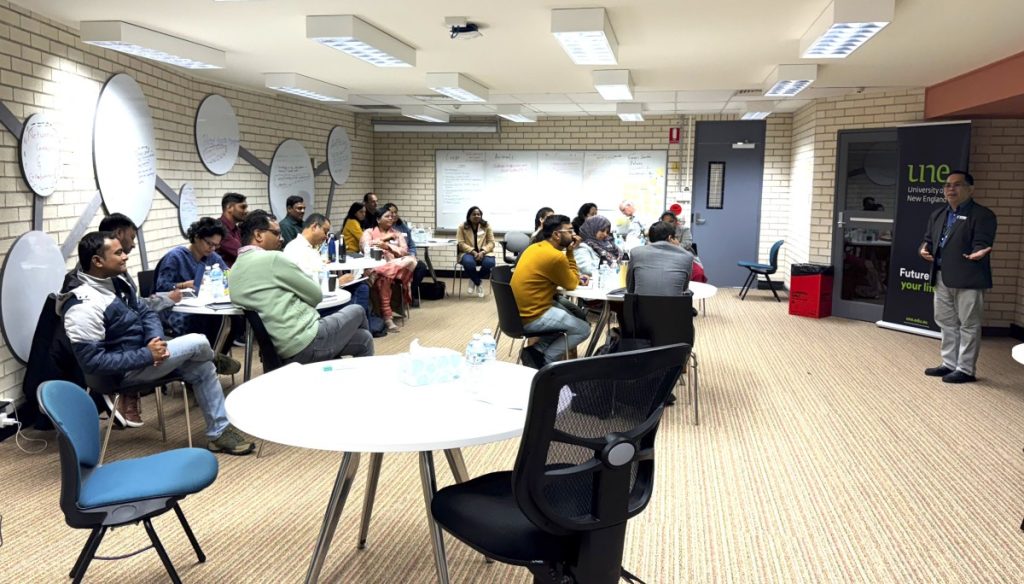
Kavitha (back row, in blue salwar) pictured attending lectures with other Short Course participants during her time in Australia.
Our learning journey began with a welcome dinner with faculty at the University of New England and continued through interactive sessions until our online certification in August 2025. From May to August 2025, the faculty kept us continuously engaged through discussions, group work, exposure visits and global food security lectures. The sessions were highly engaging and thought-provoking, encouraging us to think beyond our individual disciplines and consider the broader food systems landscape.
During the program, we visited Canberra, Sydney and the New England region of New South Wales. In Canberra, visiting Parliament and seeing that it is open to the public inspired us deeply. Witnessing transparency and accessibility at the highest level of governance was a powerful experience. It showed how public engagement and trust in institutions play an important role in shaping policies, including those related to food security. In Sydney, we explored the city and admired the iconic Sydney Opera House. Our academic sessions were hosted in the New England region, where we interacted closely with faculty and experts. These visits helped us connect classroom learning with real-world examples and encouraged us to think about solutions that could be adapted to India.
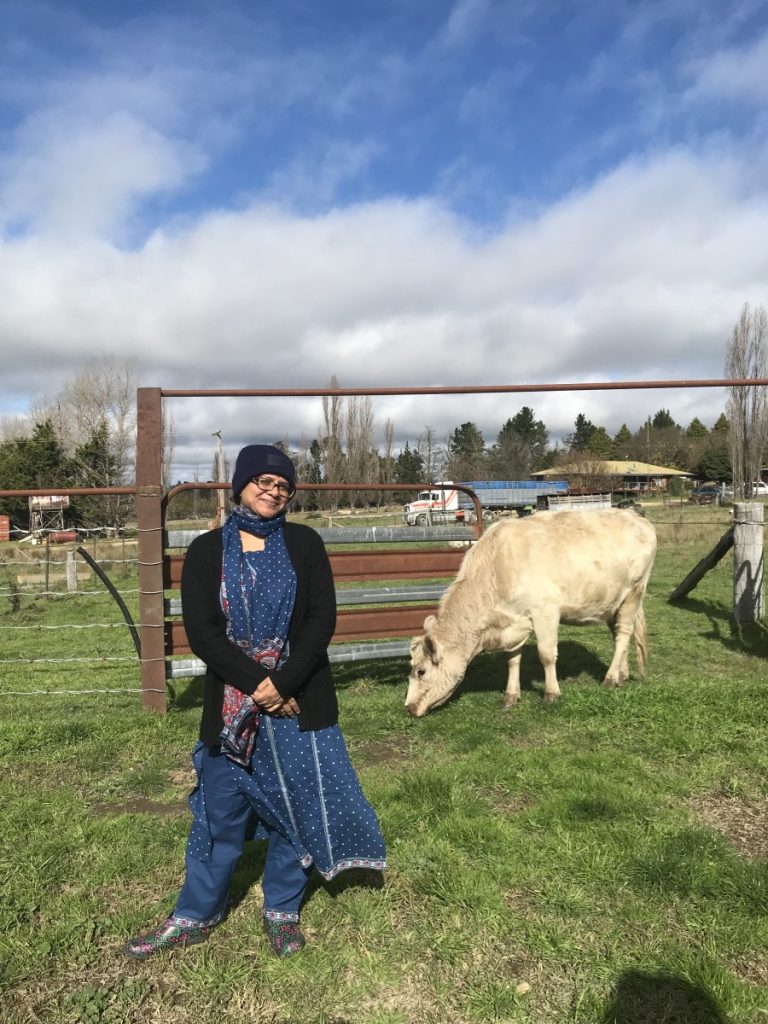
Kavitha visiting a farm during her time in Australia.
Seeing practical examples in Australia strengthened our belief that many of these approaches could be applied back home. The experience encouraged me to think more deeply about how research, governance and policy must work together to improve agrifood systems.
This learning became a key part of my Return-to-Work Plan. After completing the training, I conducted a sensitisation workshop at my organisation, the International Crops Research Institute for the Semi-Arid Tropics (ICRISAT), to help colleagues better understand nutrition-sensitive and inclusive agrifood systems. This workshop focused on introducing the systems perspective I had learnt and encouraging colleagues to move beyond siloed approaches.
The Australia Awards experience did not end with the Short Course. It opened the door to continued collaboration with the professors and experts who delivered the training. Since completing the course, I have been collaborating with faculty at the University of New England on various initiatives. These ongoing partnerships demonstrate the long-term value of the Australia Awards network.
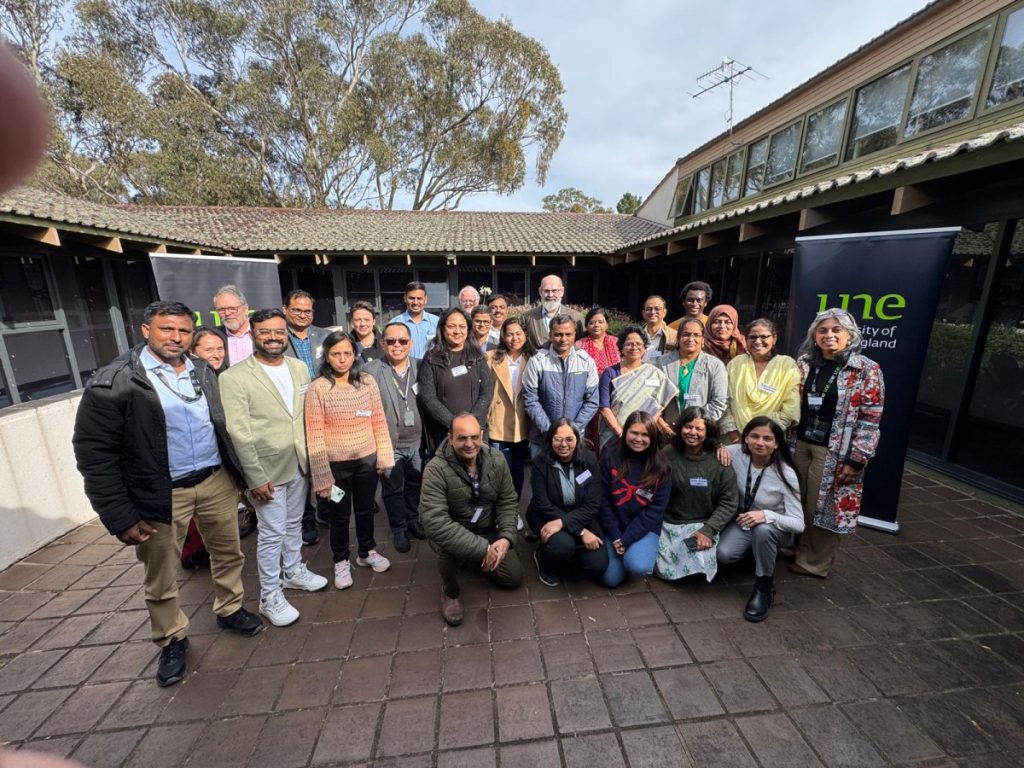
Kavitha (second row, fourth from right) with fellow Short Course participants and course leaders at the University of New England in 2025.
Most importantly, the course changed how I think and work. It gave me the confidence to bring people together across disciplines, to connect research with practice, and to advocate for nutrition-sensitive and inclusive agrifood systems.
The Australia Awards experience showed me that investing in people creates ripple effects far beyond the training itself. What began as a learning opportunity has grown into ongoing collaboration, institutional change, and a stronger commitment to improving food security and nutrition in India.
I have also remained actively engaged with the Australia Awards alumni network by participating in capacity-building events and knowledge-sharing activities. These engagements have allowed me to continue learning, exchange experiences with fellow alumni and strengthen collaborations that support ongoing development impact.