

Alumna deploys artificial intelligence to improve access to justice in India
Posted: 10 March 2026
Smita Gupta is a law graduate who transitioned into technology and artificial intelligence (AI) even before the recent global surge of interest in generative AI. Currently, she is Director – GovTech and Public Sector at jhana, where she works at the intersection of AI, public policy, and the judicial and government systems in India.
In May 2025, she completed the Australia Awards Regional Short Course on Women in Executive Leadership Development, alongside 17 emerging women leaders from the government, civil society and private sector in Bhutan, India, Maldives, Pakistan and Sri Lanka. The course, which was delivered by the University of Queensland, involved participants travelling to Brisbane, Canberra, Sydney and Colombo.
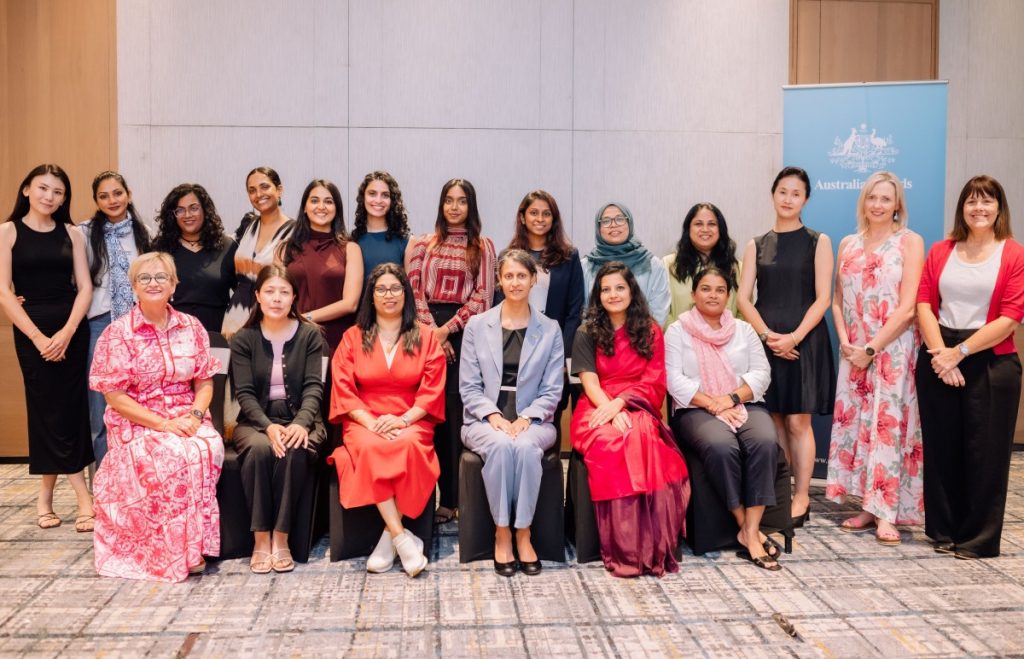
Smita (back row, fifth from left) marks the completion of the Short Course at a ceremony in Colombo, receiving her certificate from Lalita Kapur, Australia’s then Deputy High Commissioner to Sri Lanka.
Smita received a Bachelor of Arts and a Bachelor of Legislative Law from Rajiv Gandhi National University of Law in Punjab, India, in 2021. She started working on and leading the OpenNyAI initiative (which aims to scale access to justice through AI public goods) at Agami in 2021 and since then has been working to bridge the gap between legal systems and emerging technologies. Her work focuses on building and deploying AI solutions and tools that improve the accessibility, efficiency and transparency of legal and judicial systems. Smita is currently working with over five High Courts and District Courts in the live, on-ground deployment of generative AI. She assists in the implementation of AI systems in courts to facilitate faster scrutiny of case filings and providing real-time judicial dashboards, all aimed at addressing the primary causes of case backlogs in the Indian judicial system, which currently has more than 50 million pending cases. One of her most significant contributions is leading initiatives that apply AI to improve access to justice in India. Through hackathons, residencies and collaborative research initiatives, she and her team have built a diverse community of technologists, lawyers and researchers developing open-source AI solutions for the legal sector.
She played a pivotal role in developing Jugalbandi, a pioneering generative AI application in India that facilitates voice-to-voice access to legal information and government schemes. This initiative, created in collaboration with Microsoft, gained international attention when it was featured in Satya Nadella’s keynote address at Microsoft Build 2023 and presented at the G20 Summit. Smita’s significant contributions led to her selection by the Observer Research Foundation as a civil society representative for the 2024 Quad Critical and Emerging Technologies Forum in Japan, where she provided important insights on enhancing Quad’s engagement in the Indo-Pacific region. Additionally, she is serving as an Ambassador for Ayra (a global acceptance network), having begun her term in 2024.

Smita (fourth from right) pictured with Satya Nadella, the CEO of Microsoft, after delivering a presentation to him on India’s advancement in generative AI for Access to Justice in 2024.
A significant moment in Smita’s leadership development occurred when she participated in Agamishaala, a peer learning community for changemakers and leaders within the law and justice ecosystem in India, as one of the youngest members of the 2021 cohort. There, learning from Manish Srivastava of the Presenting Institute shifted her perspective on systems change from a focus on diagnosis and execution to a deeper understanding of the often-unseen dynamics at play. This prompted her to recognise her tendency to rush to conclusions, leading to a significant transformation in her approach to facilitating discussions. She has since become more deliberate in her communication, thoughtfully balancing when to speak, when to listen and how to foster urgency while ensuring stability.
She says women in rural India face significant challenges due to limited access to legal information and institutional systems. A lack of awareness regarding legal rights and government schemes hinders their ability to seek justice effectively, as do structural barriers within institutions, such as complex procedures, language issues and inadequate digital tools. The persistent gender gap in technology and decision-making spaces is another challenge for women working in science, technology, engineering and mathematics (STEM) and AI governance. Smita often finds herself as the only woman in the room, and frequently the youngest person at the table. This highlights the continued need to create more inclusive leadership spaces in emerging technology sectors in rural and urban landscapes alike. Additionally, there are social and cultural barriers, where gender norms may discourage women from reporting issues or seeking legal remedies. Addressing these challenges requires both institutional reforms and technology-enabled solutions that empower citizens with information and accessible services.
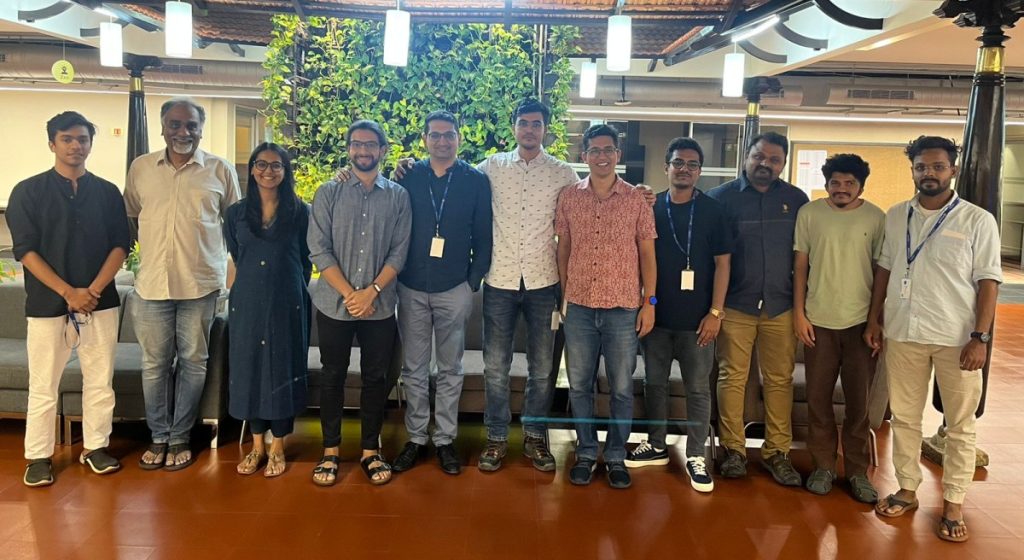
As Smita says, she is sometimes the only woman in the room—pictured here with a team of engineers and scientists from Microsoft Research, ThoughtWorks, People+AI, TinkerSpace and Agami.
Smita’s approach to addressing these challenges focuses on building collaborative ecosystems. She works closely with technologists, civil society organisations, policymakers and legal professionals to design solutions that are inclusive and responsive to citizens’ needs. To tackle some of these challenges, she co-led the Jagrit chatbot project, a multilingual legal companion that aims to answer citizens’ queries about domestic violence laws through WhatsApp and Telegram, using voice notes or text messages. Jagrit utilises technical tools such as jugalbandi.ai, BHASHINI speech models and generative AI reasoning models. Smita also actively engages with government institutions, courts and policy stakeholders to ensure that innovations developed by the community can be responsibly adopted at scale. By creating platforms for collaboration among communities, technologists and institutions, citizens’ voices can amplify solutions that genuinely serve the public interest.
Smita says that participating in the Australia Awards Regional Short Course on Women in Executive Leadership Development was a transformative experience in her leadership journey. “The Short Course strengthened my leadership skills by exposing me to global perspectives on inclusive leadership, governance and institutional change,” she says. “It provided an opportunity to learn from accomplished women leaders across the region and reflect on how leadership can drive systemic impact.”
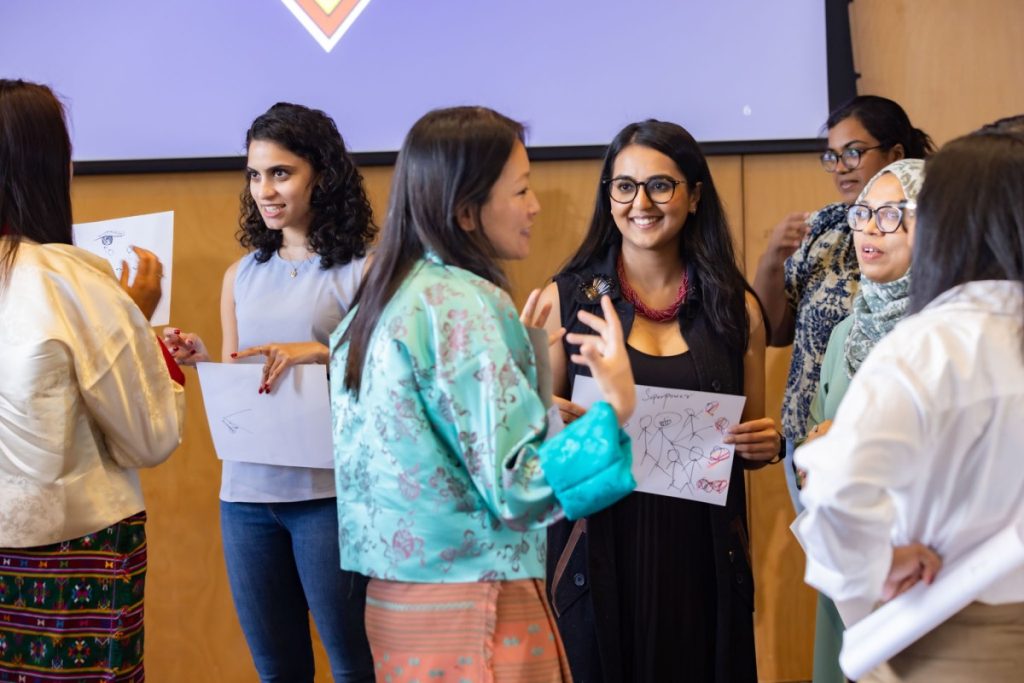
Smita (in black dress) with other participants in the Women in Executive Leadership Development Short Course in Brisbane in February 2025.
One of the most evident ways she demonstrated her leadership was through delivering training and designing change management strategies throughout the entire hierarchy of the Courts, from filing staff up to the Chief Justice of the High Court. Each room required a different approach. Smita says the key was to assess the dynamics of each room, connect with individuals at their level, and transform what can often feel like an overwhelming and intimidating process of change into something that seems achievable—and sometimes even welcomed.
She mentions that a course director from the Short Course said, “People don’t resist change; they resist loss.” This statement has stayed with her. “It fundamentally changed how I approach institutional transformation,” she says. “When you understand that what seems like resistance is often rooted in fears about relevance, competence, status or stability, you engage differently. You listen more attentively, explain more clearly and design more thoughtfully. This insight into human psychology has enabled me to use empathy not just as a soft skill but as a strategic and effective leadership tool.”
She says, “As a young woman in legal tech, I strive to lead by example, using my voice and leadership to advance changes that uplift women and underrepresented communities.”
To Smita, this year’s International Women’s Day theme (‘Rights. Justice. Action. For ALL women and girls’) means moving beyond recognition of rights to creating systems that actively enable women to exercise those rights. In her advocacy, the focus is on practical actions that empower women within the justice system. Key considerations include whether women can independently file cases, access digital forms in understandable languages, track their legal proceedings and receive respectful treatment in police stations. The design of technology and public institutions must prioritise women, particularly those from marginalised backgrounds, to ensure their rights are not merely theoretical. Action involves dismantling barriers by simplifying processes, creating accessible tools, promoting inclusive policies and enabling women to be active decision-makers. True justice is realised when women can effectively claim their rights.
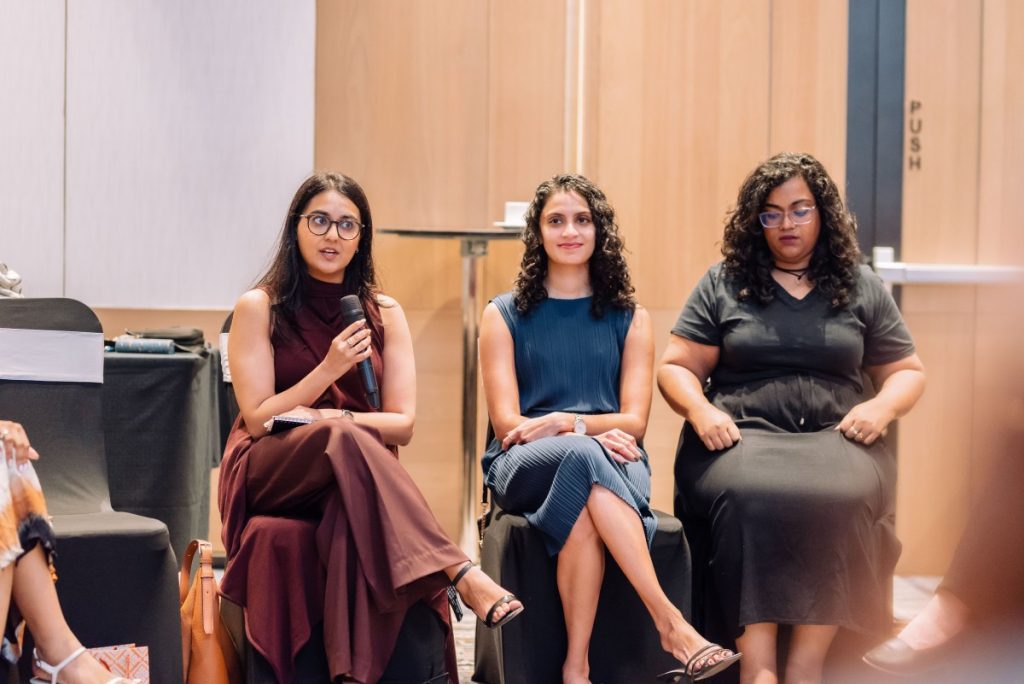
Smita speaks at the workshop in Colombo at the conclusion of the Short Course in May 2025.
Asked about her message for International Women’s Day, Smita says, “Gender justice is a challenge within our systems. It is reflected in flawed procedures, misleading data, discouraging timelines and biased decision-making. To act, we must rebuild our justice systems with equity at the core. This involves fixing broken processes, closing information gaps and developing digital tools that reduce power imbalances. We must intentionally integrate equity into the system.”